

 Team Car Delight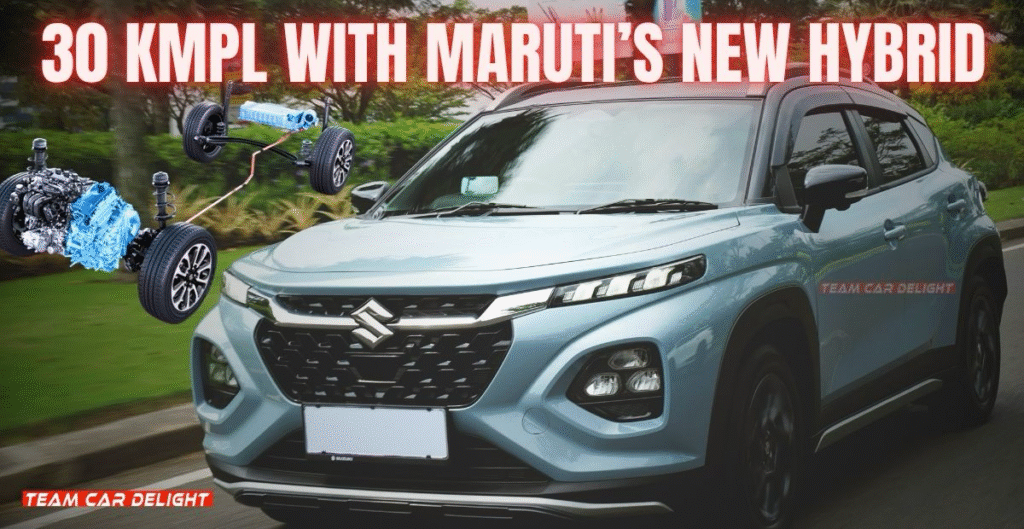
Maruti Suzuki is working on an in-house developed Series hybrid technology, which will power its affordable small cars.
Maruti Suzuki is working on a new hybrid technology for the Indian market. Codenamed HEV, the upcoming series hybrid powertrain will be in-house developed and likely use high level of localisation to keep the costs in check. It will mark a strong shift in the homegrown carmaker’s powertrain strategy, moving towards hybrid, particularly in the affordable small car segment.
What is HEV Series Hybrid and How Does It Work?
Maruti Suzuki’s HEV system is basically a series hybrid system, which is also known as range extender hybrid. Unlike traditional parallel or series-parallel hybrids where the petrol engine can directly drive the wheels, the series hybrid system employs the petrol engine as a generator, which then power the electric motor, in turn, driving the wheels.
In this case, the HEV series hybrid system will likely use the brand’s latest 1.2-litre Z12E 3-cylinder naturally aspirated petrol motor, which currently powers the Swift and Dzire. This engine will either charge a battery pack of around 1.5-2 kWh capacity, or directly drive an efficient electric motor, further transferring the power to the wheels.
Advantages of HEV Series Hybrid Powertrain

The series hybrid powertrain is generally simpler, lighter and cheaper to manufacture than the conventional hybrid system. It eliminates complex transmissions and dual-drive modes, thereby keeping the costs in check. In addition to this, the reduced components also means that the maintenance and reliability aspects are also taken care of, which is an important aspect in affordable mass-market cars. Lastly, reduced components also means lower mechanical losses, making series hybrid extremely fuel efficient, especially in urban driving conditions. These aforementioned advantages of the series hybrid system makes them a viable solution in price-sensitive segments without charging massive premium.
A Look at the Expected Numbers
While Maruti Suzuki is yet to divulge any specific details of the upcoming series hybrid tech, a few media reports previously highlighted that we can expect a fuel efficient of as high as 35 kmpl on test cycles. Since this powertrain will be primarily used for the compact car segment, the power figures are expected to be at par with their current naturally aspirated counterparts.
Which Cars Will Get the Series HEV?
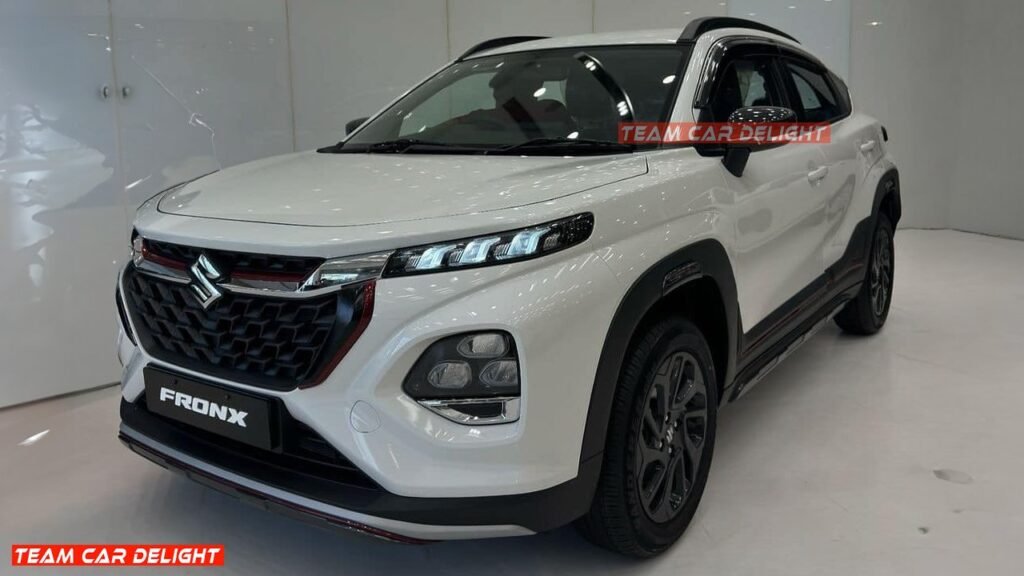
As per the information available, the Fronx facelift (codenamed YTB) will likely be the first model to be powered by the HEV series hybrid powertrain, expected to launch sometime next year. The next-gen Baleno (codenamed YTA) scheduled for a launch by the end of 2026 or early 2027, could be the second model to feature the new tech. Apart from this, the upcoming Suzuki Spacia-based compact MPV and Swift are also expected to use the series hybrid powertrain.
By 2030, Maruti Suzuki aims for hybrid cars to account for 25% of its sales, potentially 8 lakh units annually.
| Models | Expected Launch Timeline |
| Fronx Facelift (YTB) | Sometime in 2026 |
| Next-gen Baleno (YTA) | Late 2026/ Early 2027 |
| Next-gen Swift | 2027 |
| Compact MPV (Spacia-based, code YDB) | 2026-2027 |
How HEV Series Hybrid in the Brezza Could Result In Price Reduction
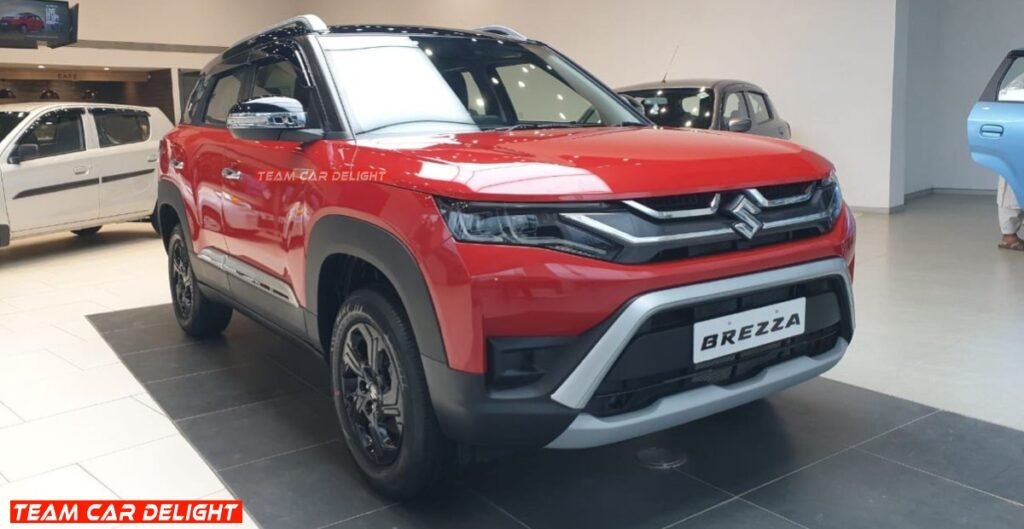
The current Brezza is powered by a 1.5-litre K15C four-cylinder petrol engine, which attracts higher taxation as the engine capacity exceeds 1200cc. Under the pre-2025 GST regime, sub-4 metre vehicles with >1200cc petrol engines faced 28% GST + compensation cess, pushing effective tax close to 45%.
With the implementation of GST 2.0 in September 2025, small cars/SUVs (≤4m length, petrol ≤1200cc) now attract only 18% GST. If the Brezza is plonked with the 1.2-litre Z12E engine, paired to the Series HEV system, it will quality for the lower 18% GST slab.
This could result in an effective price reduction in the range of Rs. 80,000 to Rs. 1.2 lakh, making it quite a value for money option. In addition to this, the higher fuel efficiency numbers of the series hybrid powertrain will add to overall package.
Current Hybrid Scenario & Upcoming Models From Other Manufacturers
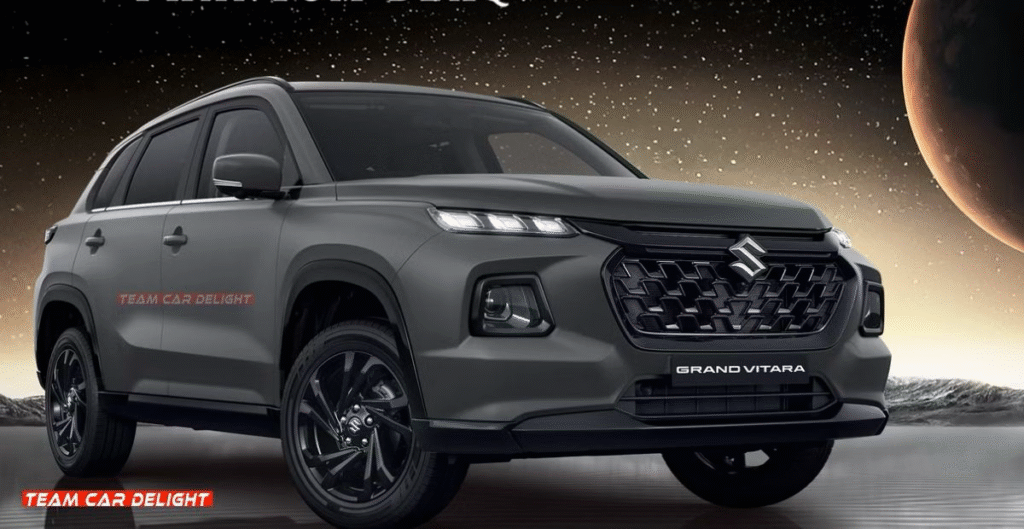
Currently, the Maruti Suzuki Victoris is the most affordable hybrid car in the Indian market. It sits alongside the Grand Vitara and Toyota Urban Cruiser Hyryder, using the same hybrid powertrain. Honda also offers its e:HEV strong hybrid Honda City in a single fully loaded variant priced at Rs. 19.48 lakh (ex-showroom). Apart from this, the Toyota Innova Hycross, and Maruti Suzuki Invicto are also available with a strong hybrid setup.
Setting aside Maruti Suzuki, popular manufacturers like Hyundai, Kia, Mahindra, Nissan and Renault are working on a slew of localised hybrid cars for the Indian market.
| Car Manufacturer | Expected Hybrid Cars & Launch Timeline |
| Hyundai | Next-Gen Creta in 2027, New 7-Seater SUV (2027), Flagship Palisade (2028) |
| Kia | Next-Gen Seltos in 2026, New 7-seater SUV (2027) |
| Mahindra | XUV3XO Hybrid (likely in 2026), Range Extended Hybrid option for BE 6 & XEV 9e are also under consideration. |
| Renault | New-Gen Duster (Hybrid version launch expected by the end of 2026) & Boreal 7-Seater SUV (2026-2027) |
| Nissan | Tekton Hybrid (Around the same timeline as Duster Hybrid) |
Final Thoughts
With the fuel prices reaching all time high and the traffic-ridden urban driving conditions, hybrid powertrain becomes a no-nonsense choice for the customers. However, the heavy premium over the regular petrol counterparts is what holds back a buyer from switching to hybrid cars. With the Maruti Suzuki’s upcoming HEV series hybrid system, the affordability aspect will be addressed, especially in the sub-Rs 15 lakh segment, where there are no hybrid option as of now.